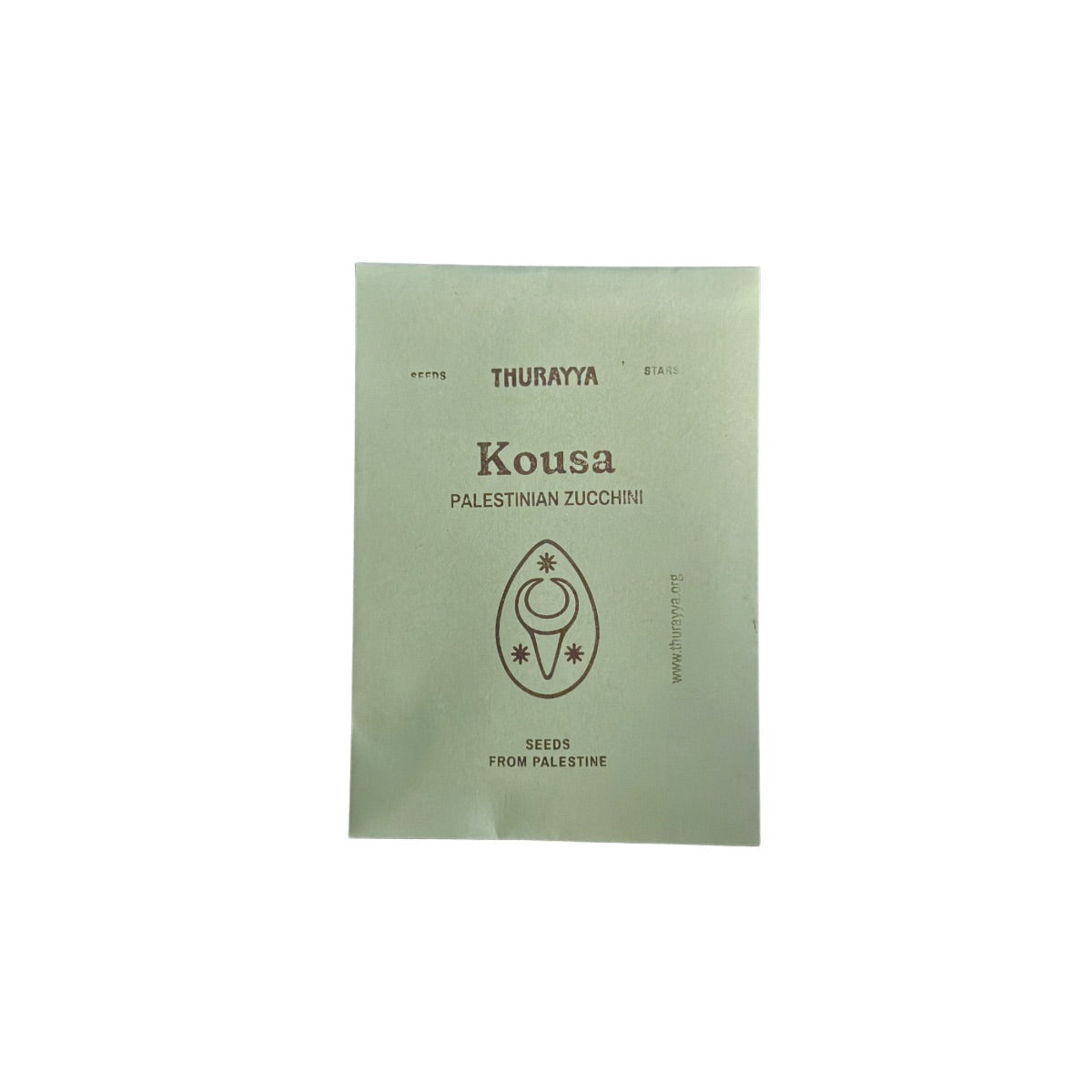

Thurayya Seeds
Couldn't load pickup availability
Kousa is a type of tender, pale zucchini found growing abundantly throughout Palestine during the summertime months and is the main ingredient for the beloved Kousa-Mashi ("stuffed kousa) recipe in which kousa are cored and stuffed with a mixture of rice, meat and aromatic spices then simmered in either a tomato broth or a creamy yogurt sauce. It’s best to harvest kousa when fairly small so it’s easier to core and stuff.
Thurayya
Thurayya is a community-led seed saving initiative to preserve, grow, and share heritage seeds from Palestine. We believe that seeds are more than just the beginning of food — they carry stories, memory, resistance, and the future of our collective nourishment. https://www.thurayya.org/plants
At a time when our people and our lands are going through one of the most devastating periods in our collective history and memory, we work alongside community to reconnect to one another and fortify our relationships with the land and each other. This work is about self-determination, healing and making a promise to our future generations that we are still here.
Why Seeds from Palestine?
Palestinian seeds carry generations of knowledge, resiliency, and connection to the land. In the face of occupation, genocide, and ecological destruction, these seeds — like our people — have endured and will continue to endure. They are a symbol of our presence in and connection to our land.
We are growing these seeds in diaspora, not as a replacement for our homeland, but as a way to continue being in connection to and relationship with her.
Thurayya is an idea, a dream to be grounded in the land and guided by knowledge built over generations, and a return to what we know in order to create a new way of being for ourselves and the next generations.
PLANTING AND HARVESTING NOTES
Plant indoors in early spring or direct seed outside a few weeks after the last frost. Planting depth is about half an inch (a good rule of thumb for planting seeds is to plant to the depth of the size of the seed).
Plant 12 to 24 inches apart if growing on a trellis or 36 inches apart if not. Keep rows 3 to 4 feet apart. These plants love to crawl!
Harvest fruit when small, no larger than the palm of your hand.
SEED KEEPING NOTES
Select the fruits and/or plants that you would like to save for seed and leave on the plant for as long as possible. The fruits can get fairly large, about 18-24 inches long (see photo on bottom right). Before the plant has died or before the fruit starts rotting, harvest the fruit and let them sit for about a week before processing for seed.
Fakous seed is wet processed like cucumber seeds. Scoop out seeds into a bucket and fill with water. You want to have less than a quarter of the bucket filled with seed and the rest filled with water. Let that sit for 3-5 days, depending on the temperatures outside (if hotter, they can sit for a shorter period of time) and be sure to stir or spray with water each day. This process helps separate the seeds from the flesh and helps break down the outer coating around the seeds. Viable, healthy seeds are heavier and will sink to the bottom while non viable seeds are lighter and will float to the top. When the wet fermentation process is done, pour out water from the bucket, careful to not pour out the heavier seeds at the bottom. Keep rinsing/decanting the seeds until the water runs clear. Then pour the seeds out into a strainer and spread the seeds over a screen or a blanket and let them completely dry out of direct sunlight.
Once seeds are completely dry, you can store in an airtight container out of direct sunlight.
RECIPES/FOOD PREP
Fakous is often found among the large platters of seasonal fruits that are eaten in the summers in Palestine. We eat it whole, sometimes dipped in salt, and it has an unforgettable crunch, thin skin, and slightly sweet flavor—never bitter!
Fakous is also often pickled and are very delicious and maintain their crunch in this form.