
Thurayya Seeds
Couldn't load pickup availability
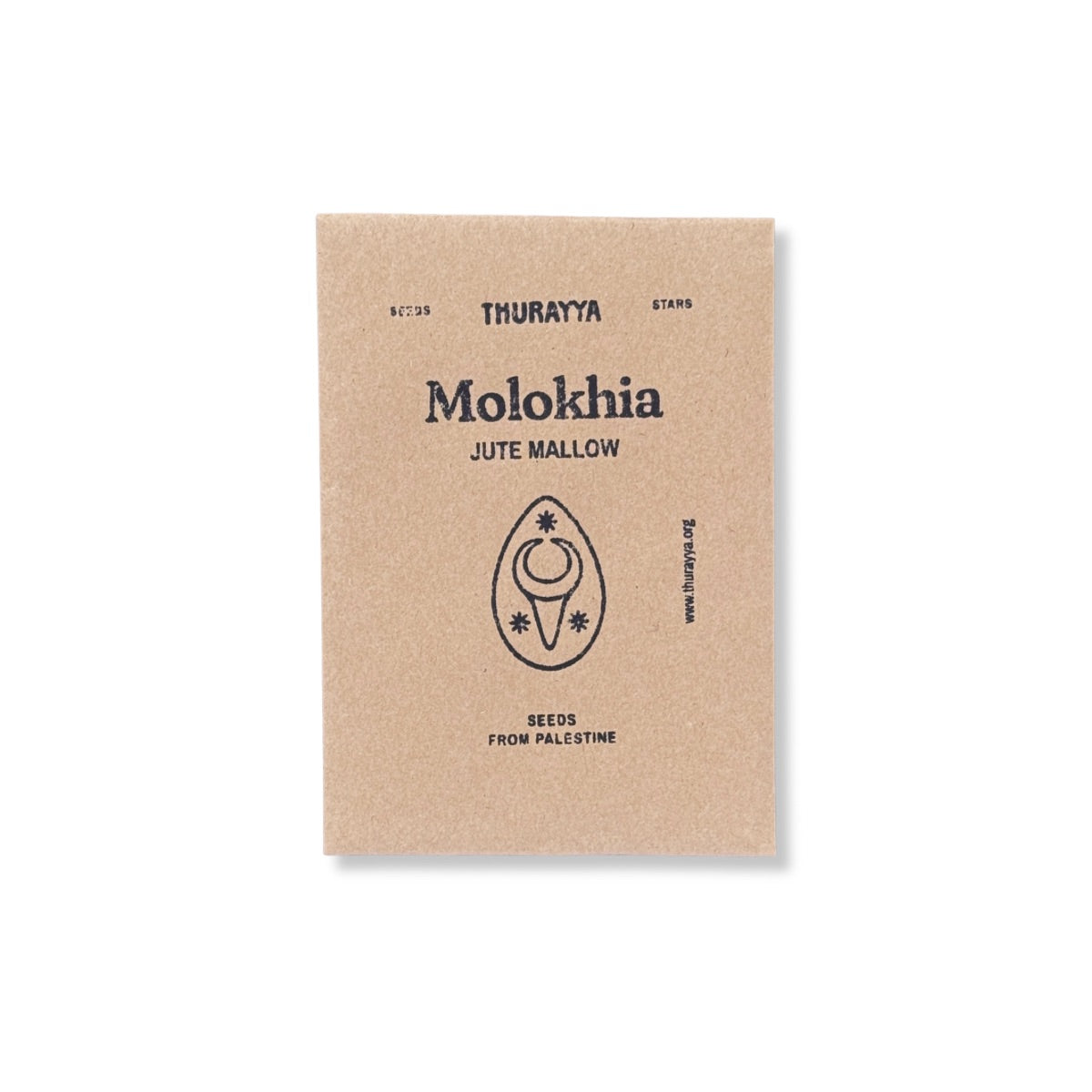
Our beloved Molokhia has been cultivated and eaten since the time of the pharaohs. A plant that immediately captures your attention when you see it with its bright green leaves that catch the sunlight and leave you mezmerized. The more time I’ve spent with this plant, the more I fall in love with her. She is incredibly generous in her output of leafy greens and if you’re growing to save seed, her seed output is even more abundant. AND, to make this plant even more majestic, the seed pods look like stars and the seeds look like tiny emerald jewels!
Thurayya
Thurayya is a community-led seed saving initiative to preserve, grow, and share heritage seeds from Palestine. We believe that seeds are more than just the beginning of food — they carry stories, memory, resistance, and the future of our collective nourishment. https://www.thurayya.org/plants
At a time when our people and our lands are going through one of the most devastating periods in our collective history and memory, we work alongside community to reconnect to one another and fortify our relationships with the land and each other. This work is about self-determination, healing and making a promise to our future generations that we are still here.
Why Seeds from Palestine?
Palestinian seeds carry generations of knowledge, resiliency, and connection to the land. In the face of occupation, genocide, and ecological destruction, these seeds — like our people — have endured and will continue to endure. They are a symbol of our presence in and connection to our land.
We are growing these seeds in diaspora, not as a replacement for our homeland, but as a way to continue being in connection to and relationship with her.
Thurayya is an idea, a dream to be grounded in the land and guided by knowledge built over generations, and a return to what we know in order to create a new way of being for ourselves and the next generations.
PLANTING AND HARVESTING NOTES
Plant after the frost in the spring. You can direct seed or plant in trays. Planting depth is just below the soil surface ((a good rule of thumb for planting seeds is to plant to the depth of the size of the seed). Space rows 30-36 inches apart, and space plants within the row 6-12 inches apart for continuous harvesting or 2-3 inches apart for bunched greens. If you prefer to thin, you can sow seeds closer (6 inches apart) and then thin the seedlings to a final spacing of about 12-18 inches.
Continually pruning back plant will help encourage growth over the season. To harvest, cut longer stems and pick off individual leaves. Wash and dry leaves and either dry them completely out of direct sunglight or freeze them for long-term storage. Otherwise, leaves can be eaten fresh.
SEED KEEPING NOTES
If growing for seed, space plants 24-36 inches apart. Let seed pods dry on the plant, weather permitting, until seed pods look like the photo on the bottom right. If you need to pull the plants earlier, let seeds mature for as long as possible, then cut the whole plant from the stalk and let dry down. You can do this by hanging the plants upside down or spreading them out over a tarp or blanket out of direct sunlight.
Once seed pods are fully dried, you should be able to crack them open and collect the seeds. If you have a lot of plants, you can step on the pods over a tarp to release the seeds and then collect the seeds. Clean the seeds with seed screens or winnowing and store in an airtight container out of direct sunlight.
RECIPES/FOOD PREP
Molokhia is eaten across Palestine, Egypt, Sudan, Syria, Lebanon, Jordan, all the way across to West Africa, the Caribbean and southeast Asia, namely the Philippines and Vietnam.
In Palestine, we eat this green as a stew, most often with chicken and served over rice with vermicelli noodles (though each family has their own touches. For example, my grandmother would add sliced tomatoes to the stew to soak up some of the sliminess of the molokhia). Most every recipe though calls for lots of fried garlic and fresh lemon juice.
Molokhia is in the mallow family making the stew somewhat slimy and incredibly nourishing. Molokhia is famed for its nutritional benefits including promoting healthy digestion and improving sleep.
What is Thurayya?
Thurayya is a community-led seed saving initiative to preserve, grow, and share heritage seeds from Palestine. We believe that seeds are more than just the beginning of food — they carry stories, memory, resistance, and the future of our collective nourishment.
Thurayya is the Arabic name for the Pleiades star cluster, a grouping of stars in the constellation of Taurus. Thurayya can also mean abundance, earth and possibly also moisture. Its setting on the western horizon in Autumn was a sign to the peoples of the region that the winter rains were soon coming to replenish the land and revive the green foliage of the desert.
At a time when our people and our lands are going through one of the most devastating periods in our collective history and memory, we work alongside community to reconnect to one another and fortify our relationships with the land and each other. This work is about self-determination, healing and making a promise to our future generations that we are still here.
Why Seeds from Palestine?
Palestinian seeds carry generations of knowledge, resiliency, and connection to the land. In the face of occupation, genocide, and ecological destruction, these seeds — like our people — have endured and will continue to endure. They are a symbol of our presence in and connection to our land.
We are growing these seeds in diaspora, not as a replacement for our homeland, but as a way to continue being in connection to and relationship with her.